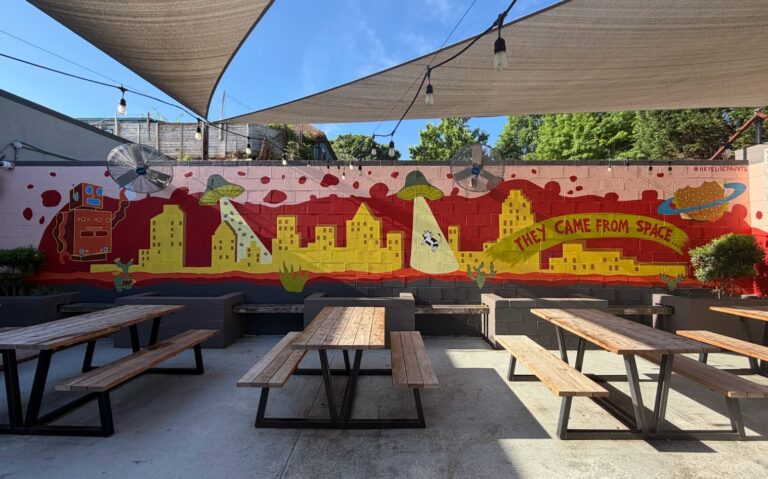
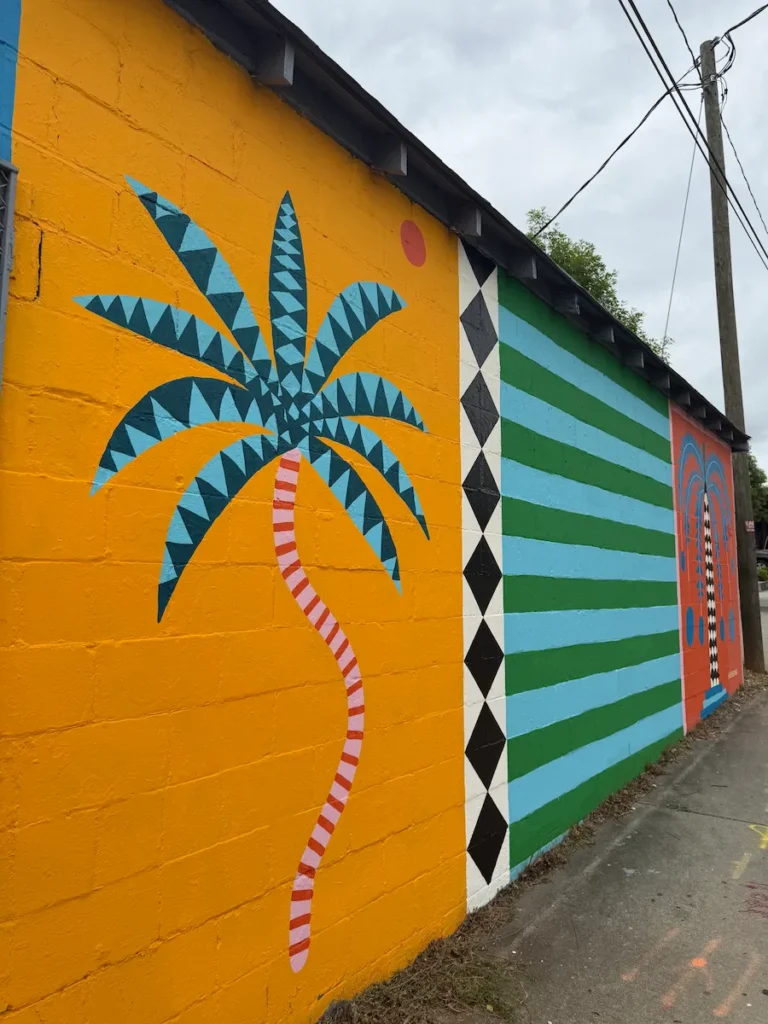
Murals for Community Improvement Districts: From Blank Walls to Public Landmarks
A blank wall can become something special. In the right place, it can become a landmark that people remember when they think about their neighborhood.
Think about a wall along a busy street, an underpass covered in graffiti, or the side of a building that people pass every day without noticing. These walls can become more colorful and interesting with the right mural.
That’s what I love about community murals. They bring color to empty spaces, show what makes a neighborhood special, and tell local stories through art.
I’m Elise Garcia, an Atlanta mural artist. I create custom murals for cities, communities, and organizations that want to make their public spaces more colorful and welcoming.
For Community Improvement Districts (CIDs), a mural can turn an ordinary wall into a place people notice and remember. Let’s look at some community mural ideas that can bring new life to these spaces.
What Is a Community Improvement District Mural?
CID community murals are public artworks that are made for public spaces, which include commercial districts, pedestrian areas, parking structures, or community meeting places.
Whereas murals for individual businesses would usually depict something about the business itself, community murals would have to encompass more than just the business. They could be based on history, the neighborhood’s culture, landmarks, or any other distinguishing feature of the district.
CID community murals could also have many interested parties, such as property owners, local groups, business people, or public space planners.
This concept becomes very important because of that fact.
10 Community Mural Ideas for Improvement Districts
There are ten ways CIDs can turn blank walls and underused spaces into meaningful public artwork.
1. Neighborhood Identity Murals
Each community has specific features that help differentiate it from others. It can be architecture, iconic features of a place, culture, or a sign that people will instantly connect with the community.
The City of St. Louis’s guide to building murals provides guidance on using murals to improve public spaces and neighborhood appearance.
Such features can serve as a basis for the creation of the mural.
The concept would involve the creation of unique art based on architectural landmarks and neighborhood color and iconic features. Instead of depicting only one feature of the place, multiple elements would be combined into the original artwork.
It appeals to me because there is no other place where it could make sense to create such mural.
2. Atlanta-Inspired Community Murals
Atlanta is not lacking inspiration when it comes to the creation of public art.
However, the creation of a mural inspired by Atlanta does not have to include its most famous buildings.
A CID can commission a piece of art inspired by its immediate environment, which may include parks nearby, buildings, local culture and traditions, or stories told by residents and business owners.
For example, a CID might need a mural that would combine elements of architecture and nature in its design, using shapes and colors specific to the surroundings.
When creating location-inspired artwork, I want my local references to be organic to the design.
3. Murals That Turn Blank Walls Into Landmarks
Some walls are simply too hard to ignore. Such walls line busy downtown thoroughfares, lie on main roads, or are located in places close to pedestrian walkways.
Such sites may be perfect for large-scale public murals.
A building facade could become a bright spot, and a parking garage could boast artwork that would transform the entire streetscape.
It all depends on where the wall is situated and how far it will be viewed from. A mural that can be viewed from across a busy street requires a completely different approach than one viewed when passing by.
The idea is to transform an ordinary place into something memorable through a specially designed piece of art.
4. Graffiti-to-Art Murals
Some neglected walls and graffiti-able areas can pose problems for the community.
A mural that is planned ahead of time can provide an alternative method to deal with such spaces. Rather than neglecting the wall or simply considering it to be a maintenance issue, the CID can investigate the possibility of making the wall look better through art and integrating it into the community.
This could include the design of a retaining wall, the outside of a building, or a structure facing the public that requires some work.
Clearly, painting a mural does not necessarily mean that the problem of graffiti or vandalism will be solved.
It may still require some surface maintenance, protective coatings in some cases, and maintenance.
5. Community History Murals
What stories must be known regarding a neighborhood?
A community history mural may incorporate information regarding the history, landmarks, shops, prominent figures, and key moments in the history of the neighborhood.
There is an option of creating a visual timeline of the area starting with its past and going through to the present. There is another option of combining all the historical references into one painting.
Personally, I would concentrate on the stories that are really important and not try to fit in all the historical information.
The carefully designed mural will provide the residents with a new opportunity to get connected with the neighborhood and also acquaint the visitors with its history.
6. Local Nature and Landscape Murals
Nature-inspired art can add color to the environment, especially in areas where the built environment is prevalent.
Imagine murals that depict the local flora and fauna, such as native plants, flowers, trees, wildlife, rivers, and other natural landscapes.
For example, there can be a garden-themed mural on a wall adjacent to a park or an underpass designed using flowing forms and natural colors, which will help make the structure appear more natural.
The murals do not have to be realistic landscape paintings. They can be botanical drawings or abstract patterns of nature.
7. Community Celebration Murals
Neighborhood festivals, cultural celebrations, and traditions can serve as inspiration for community artwork.
The mural could be representative of the creative spirit of the neighborhood, an homage to the celebration itself, or include imagery related to the traditions of the neighborhood.
In a CID, this could help to establish a visual link between the art piece and the activities that are already bringing people together.
I would begin with an exploration of what makes the celebration special and use a few elements to build the design around them.
8. Interactive and Photo-Friendly Murals
Sometimes, murals may prompt people to stop and view them closely.
This could be because of their unique composition, interesting design, or some features of the work that reveal themselves upon closer inspection. Such elements can make the artwork more attractive for pedestrians who walk through the neighborhood.
I don’t think it would bother me if people stopped to take pictures of my mural.
In the case of CIDs, this mural can be recognized as a distinctive feature of the public place through which pedestrians pass or where people gather. The main thing here is to make sure the artwork is appealing in its real form and not only in photos.
9. Infrastructure Murals
Bridges, underpasses, parking structures, retaining walls, and utility structures are often overlooked when communities think about public art.
Yet these functional spaces can offer substantial surfaces for creative work.
A bridge wall might feature flowing patterns, while a parking structure could incorporate bold geometric forms or imagery connected to the district. An underpass might use color and composition to make the space feel more visually interesting.
Before developing the design, I’d consider the structure’s surface, lighting, exposure, and viewing conditions. Infrastructure murals need to work with the space rather than fight against it.
10. Community Storytelling Murals
Sometimes a neighborhood’s story is too broad to fit into one central image.
A storytelling mural can bring together people, places, local symbols, historical references, and future aspirations in a connected design.
For example, different sections of a long wall could represent the area’s past, present, and future. Another mural might combine familiar community landmarks with symbols of local culture and shared goals.
I like this approach because it leaves room for different aspects of a community’s identity while giving the artwork a clear overall direction.
How to Choose a Community Mural Concept
Before commissioning a mural, I’d work through a few questions with the CID or project team.
- Start with the neighborhood. What makes this district recognizable? Consider its history, architecture, culture, and familiar local features.
- Identify the story. Decide what the mural should communicate. Is the goal to celebrate community identity, highlight local history, or bring personality to an underused space?
- Consider the audience. Residents, workers, visitors, students, commuters, and tourists may all experience the artwork differently.
- Match the scale. A mural viewed from a sidewalk needs a different composition from one seen across a road.
- Make the artwork feel native to the location. The goal isn’t to drop a random beautiful image onto a wall. It should feel like it belongs there.
From Blank Wall to Public Landmark: My Mural Process
Every project is different, but I approach community murals by first understanding the place and what the artwork needs to accomplish.
1. We Talk About the District
I want to understand the neighborhood, the project’s goals, the intended audience, and the details that make the location special.
2. I Visit or Study the Space
I consider the wall, surrounding architecture, traffic, visibility, surface condition, and viewing distance.
3. I Develop the Concept
Using what I’ve learned, I develop a creative direction that connects the mural to its surroundings and the project’s purpose.
4. We Refine the Design
Feedback from relevant stakeholders helps clarify the concept and address project requirements before painting begins.
5. I Prepare the Surface
Surface preparation depends on the wall’s condition, material, and exposure. The right preparation helps establish a suitable foundation for the artwork.
6. I Paint the Mural
I bring the approved design to life on the wall, considering the scale, surface, and conditions of the installation.
7. The Wall Becomes Part of the Neighborhood
The finished mural becomes a new visual feature of the space, connecting the artwork with the people and places around it.
Community Murals for Atlanta Improvement Districts
Atlanta’s neighborhoods offer plenty of opportunities for public artwork, from historic commercial districts to busy urban corridors and infrastructure that could benefit from a more thoughtful visual approach.
For Atlanta CIDs, the strongest mural concepts often begin with the specific location. Local architecture, neighborhood stories, community traditions, and surrounding landscapes can all help shape an original design.
I’m based in Atlanta and create custom public murals for cities, communities, and organizations. I can also travel for the right mural projects.
If your district has a wall worth reimagining, explore my public murals for cities and communities to learn more about the possibilities.
Have a Blank Wall in Your District?
If there’s a wall in your district that feels more like an eyesore than an asset, let’s talk about what it could become.
I love taking overlooked spaces and turning them into colorful pieces of the neighborhood. Whether you’re considering a mural for a downtown corridor, an infrastructure project, or a community gathering place, I’d love to hear what you have in mind.
Let’s Talk About Your Community Mural
People Also Ask
What are good community mural ideas?
Community mural ideas include neighborhood landmarks, local history, cultural celebrations, nature, and community storytelling.
How can a Community Improvement District use a mural?
A CID can use murals to celebrate local identity, improve public spaces, and create recognizable neighborhood landmarks.
Where can CIDs install community murals?
CIDs can install murals on building exteriors, underpasses, parking structures, retaining walls, and pedestrian corridors.
Can murals cover graffiti-prone walls?
Yes, murals can cover properly prepared walls, but they don’t guarantee graffiti prevention.
Can a community mural reflect local history?
Yes, murals can feature historic buildings, important people, local businesses, and community milestones.
How much does a large community mural cost?
Costs depend on wall size, design complexity, surface preparation, materials, and installation requirements.
How long does a public mural take?
The timeline depends on the mural’s size, design approvals, surface preparation, weather, and painting requirements.
What surfaces can be used for community murals?
Suitable surfaces include properly prepared concrete, brick, stucco, and other paintable walls.
Do you create murals for Atlanta CIDs?
Yes, Elise Garcia creates custom public murals for Atlanta communities, cities, and organizations.
Do you travel for public mural projects?
Yes, Elise can travel for suitable public mural projects, depending on the location and project scope.

I’m Elise Garcia, a professional wall doodler.
Part-time ladder acrobat, full-time color enthusiast. I paint murals that bring personality and life into spaces people walk past every day.